
Shark Cave, Gili Biaha
A Diver's Guide to Bali's Best Whitetip Encounter
Deep blue water, dark volcanic rock, a cavern hiding beneath the surface, and somewhere inside, sharks!
Arriving at Gili Biaha full of anticipation, this dive never disappoints. This small, crescent-shaped volcanic islet lies just off the coast of Bali, and on its south-eastern side is the reason I keep coming back: Shark Cave.
This isn’t a beginner friendly environment, currents and swell can make Gili Biaha a challenging dive, so getting the conditions right is important. Slack water is preferable, and I always recommend checking the weather forecast and tide charts before heading out. Aiming for a low swell is strongly advised.
Near the centre of the crescent is your entry point. The back roll into the water builds the excitement, particularly when you look down. It’s clear. Its’s blue. It’s deep. But we’re not here to see how deep we can go. As you descend move towards, and stay close to the rocky wall as you make your way around the crescent and, with your target depth at around 10 metres you’ll soon find the large, opening - the entrance to the cavern.
The Sharks:
And this is where I’m reminded why Gili Biaha is one of my favourite dives.
Keeping your buoyancy dialled at the entrance threshold, the cavern opens up around you. Resting on the sandy bottom or continuously cruising around the perimeter and across the entrance, there are usually three to five Whitetip Reef Sharks.
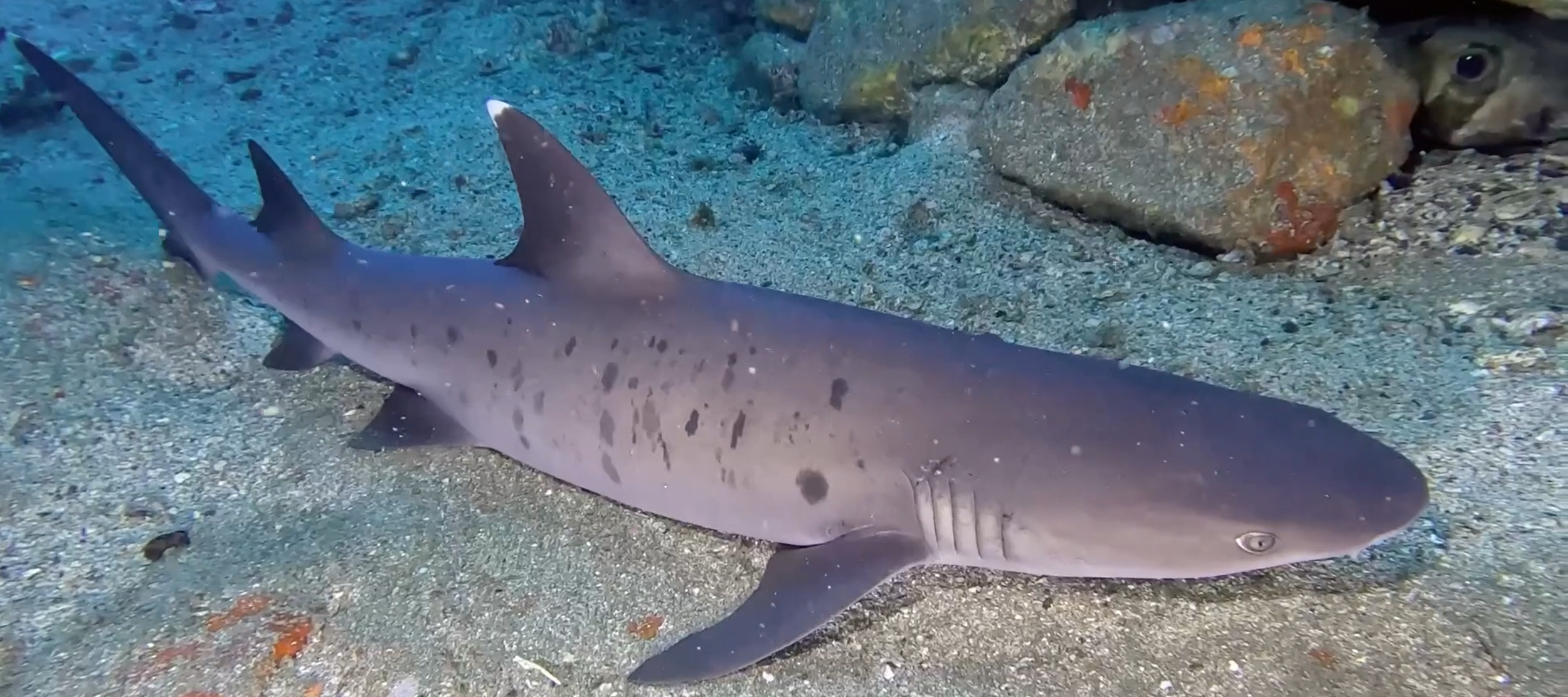
There is an incredibly rich mix of marine life here, nocturnal species, schooling fish and crustaceans, but if I'm honest, I’m only here for the sharks. Getting close to these amazing creatures and capturing them on video is what really excites me. Other divers, with the right certification often explore further into the cavern to look for lobster, crayfish, frogfish, morays and lionfish, but I’m only here for the sharks!
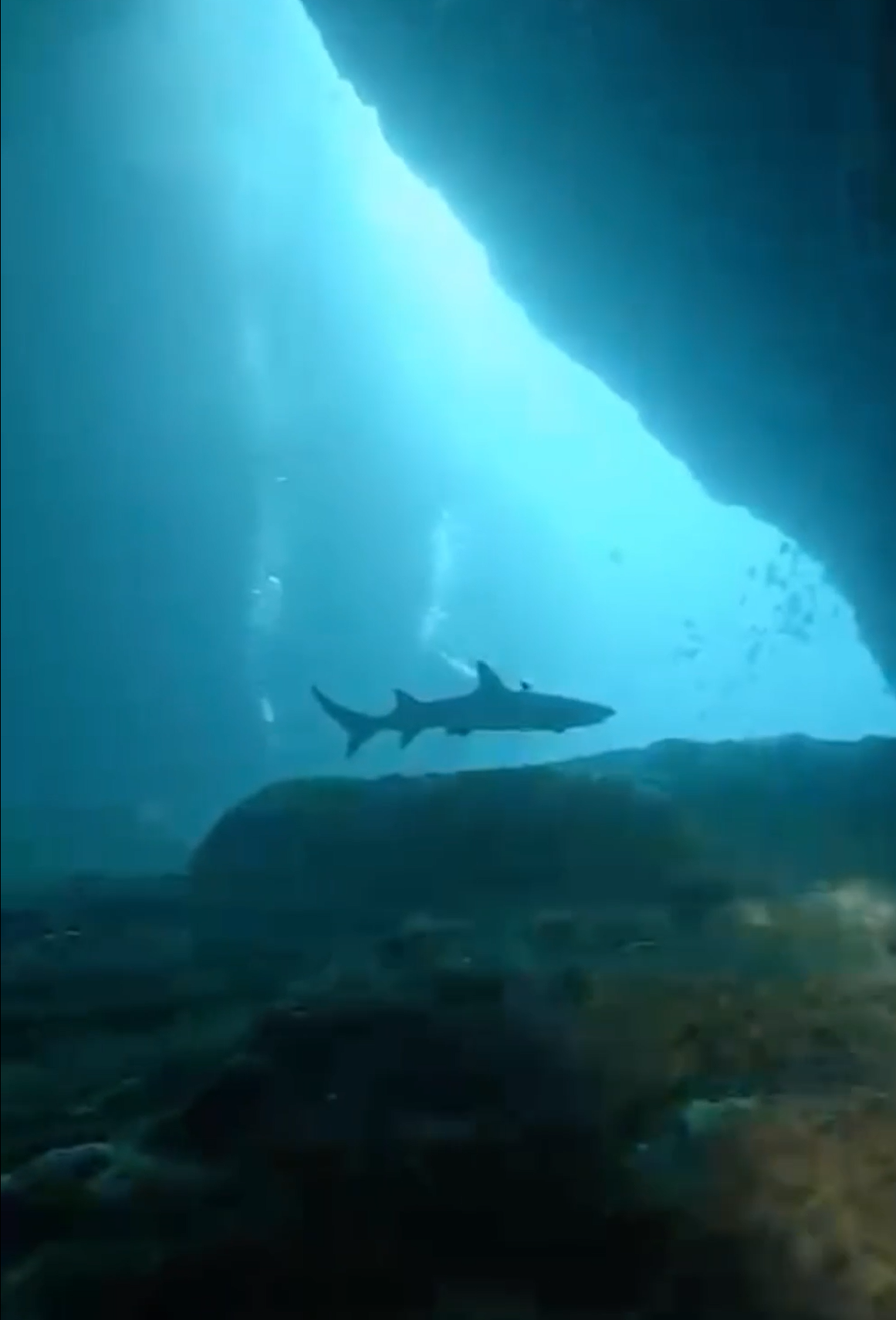
Positioned centrally at the entrance overhang, I have one of my favourite views of the dive: a shark swimming through the cavern, its silhouette passing against the blue behind it.
It’s an iconic image, and one I never tire of.
Inside Shark Cave:
Although commonly referred to as Shark Cave, this is technically a cavern rather than a true cave dive. For divers that do enter, natural light floods through the entrance, keeping you within the daylight zone. It is a single chamber with a direct line of sight to the entrance.
That doesn't mean you can relax about your position. Excellent buoyancy control is essential. Stay well clear of the rocky walls, particularly when there is any swell. Even a relatively small amount of surge can move you around as waves force water in and out of the cavern . You may even feel the movement and pressure changes in your ears. The sandy bottom is another reason for keeping your buoyancy in check to avoid a cloud of sediment being kicked up. Given the size and the ‘auditorium-like’ scale It wont cause a major visibility issue but may to spoil the view for a buddy behind you.
Beyond the Cavern
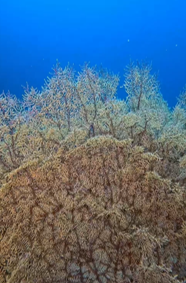
Once you've had your fill of the sharks, there is plenty more to explore beyond the cavern entrance. The walls and slopes of Biaha's dark volcanic rock plunge away into the deep blue. Keeping a close eye on your depth and NDL, take time to admire the remarkably healthy black coral bushes, sea fans and vibrant soft corals growing along the wall.
How much time you have to explore the wall will depend, of course, on how long you've spent at the cavern and how much gas you've consumed. The site offers something very different once you leave the darkness of Shark Cave and move back out onto the wall.
For me, though, it is always the same thing that brings me back. That moment when a Whitetip Shark appears from the darkness, crosses the entrance and disappears into the blue – that's Gili Biaha.